The air in my living room was thick with tension, reminiscent of the time when the entire hostel’s power went out during the World Cup final, and we all huddled around a single TV in the TV room, hanging onto every word like it was a sacred chant. Friends and family, usually chatty and jovial, sat in silence, eyes glued to the television. The final moments of the 2023 World Cup Finals were unfolding, and with each passing second, the dream of victory for the Indian Cricket team seemed to slip further away. Australia clinched the win, and a collective sigh of disappointment echoed through the room (well that might be a bit of an exaggeration considering that it was clear much earlier that India was going to lose the match).
I couldn’t help but feel a sense of déjà vu, harking back to the 2003 World Cup finals when Ricky Ponting’s masterclass left us in similar despair. I am sure that any self-respecting Indian cricket fan was highly disappointed and extremely sad post both these World Cup finals (I am trying to avoid using the word depressed as that becomes a rather clinical term). Thankfully not too long after that came the T20 World Cup; that catch by SKY, that Bumrah over – and the joy that neutralised the post-ODI World Cup loss PTSD of Indian cricket fans!
As a middle-aged man who has ridden the rollercoaster of emotions as a sports fan, I often ponder: why does this affect us so deeply? In practical terms, it makes not even an iota of a difference to my life as to who wins, whether it’s the Indian Cricket team or the Australians, whether it’s CSK or MI in the IPL. Yet, here we are, emotionally invested, riding the highs and enduring the lows. And it’s a worldwide phenomenon!
In England, football isn’t just a sport; it’s a way of life. If you think our cricket fandom is intense, try sitting in a pub during a Manchester United vs. Liverpool match. It’s like stepping into a Shakespearean drama, but with more beer and jerseys. Consider the 2014 FIFA World Cup semi final which Brazil lost to Germany horribly (7 – 1) which caused nationwide trauma. Even the then Brazilian President Dilma Rousseff had trouble accepting the result. She tweeted: “Like all Brazilians, I’m very, very sad with the defeat.” That brings me back to the big question of why we are so emotionally invested with our sports team?
Our Tribal instincts
From an evolutionary standpoint, humans have evolved as tribal creatures, often relying on tight-knit communities for survival. It’s like that this tribal instinct manifests in modern times as allegiance to sports teams, which symbolises a ‘tribe’ or community. Humans have an innate desire to belong to groups. Sports teams often serve as a focal point for community and group identity, as modern ‘tribes’. Fans unite under a common cause, which satisfies their need for belonging. The rivalry between the New York Yankees and the Boston Red Sox in Major League Baseball (MLB) is not just about the teams but also about the cities and their histories.

Replacement of warfare
Humans have a history of tribal warfare, where aggression and competition against other groups were common. Sports can be seen as a modern, civilised outlet, for these aggressive instincts, even a replacement for warfare. The competition in sports can act as a form of sublimation, where the desire for inter-group conflict is channelled into a less harmful and more socially acceptable form and generally non-violent manner (not that it stops some unruly fans from creating a ruckus and even violence when their favourite team loses). In this sense, sports can be seen as a ritualistic and symbolic replacement for actual warfare, allowing people to engage in and witness competition in a way that’s largely safe and regulated.
The Ashes series in cricket between England and Australia serves as a peaceful battleground for historical rivalries. The intense competition on the field is a symbolic representation of past conflicts between the two nations, channelled into a sporting event. Similarly, the intense rivalry between Real Madrid and Barcelona (El Clásico), often become platforms where historical and regional tensions are played out in a non-violent way, reflecting the historical rivalry between the regions of Catalonia and Castile.
The sports arena is a much more peaceful substitute for the war mongering that humans, especially testosterone fuelled men are likely to indulge in. It’s also worth noting that the craze for sports, particularly in its more fervent forms, is much more of a male phenomenon. This could be attributed to aspects of male upbringing and evolutionary tendencies that emphasise competition and group loyalty.

Catharsis and Emotional Release
Watching and participating in sports can provide a cathartic experience, allowing fans and players to release tension and emotions in a controlled environment. This catharsis might be akin to the emotional release that might have occurred in more violent tribal conflicts in the past. That may also be why we continue to engage deeply with our sports team even though we know that there will be disappointment and despair, but also joy and connection. This emotional rollercoaster can be addictive and deeply engaging. The Chicago Cubs’ World Series win in 2016 (US baseball), after a 108-year drought, provided a cathartic release for generations of fans who had experienced disappointment but remained loyal, finally experiencing the joy of victory. Fans of the Brazilian football team have experienced the whole gamut of emotions, from the despair of losing the 1998 World Cup final to the joy of winning in 2002 (very much like the Indian cricket fans who experienced this range of emotions from 2003 to 2011 World Cup Finals). This emotional journey provides a cathartic release for fans, similar to the highs and lows experienced in traditional tribal conflicts.

Vicarious Achievement
Fans often experience a sense of achievement and pride through their team’s successes. This phenomenon, known as BIRGing (Basking in Reflected Glory), allows individuals to share in the triumphs of their team, boosting their own self-esteem. The joy that we all felt when Kohli hit his 50th ODI century in the 2023 World Cup semi final is quite symptomatic of this or the pride that we felt when MS Dhoni hit the winning six in the 2011 finals.
Many of us are armchair sports enthusiasts. We might have played sports in our younger days, but now, we live vicariously through our favourite teams and athletes. We might not play on the field, but give us a couch, and we become the best armchair experts, strategizing better than the coach. Of course we fantasise of being the superstars ourselves and hitting the winning runs or scoring that winning goal! Now I consider myself slightly above this lot, but when the world cup started, and India started winning, the higher moral ground went to ground. And even though I say each year that I am not going to watch IPL matches this year, I end up watching them and following the teams, the points table, and obsessing about which of the teams are going to make the playoffs! It’s like the Eagles sang, you can leave the hotel, but the hotel doesn’t let you go!

Status and Hierarchies
Sports also reflect the human fascination with status and social hierarchies. Successful athletes often enjoy high status, much like successful hunters or warriors in early human societies. Die-hard fans of successful football clubs like Manchester United or FC Barcelona often feel an elevated status in their social circles, akin to the status of successful warriors in tribal societies.
Cultural Narratives and Myths
Sports often embody cultural narratives and myths, such as the ‘underdog story’ or the ‘heroic comeback’. These narratives resonate with people, providing inspiration and a sense of connection to larger cultural ideals. The story of the underdog Leicester City winning the English Premier League in 2016 resonates with the cultural narrative of an underdog overcoming all odds, inspiring fans worldwide, not unlike the Kapil Dev led Indian team that beat the West Indies to win the 1983 Cricket world cup. In individual sports, Michael Jordan’s return to basketball and leading the Chicago Bulls to another three championships is a modern-day ‘heroic comeback’ story, deeply ingrained in sports culture.
Socialisation and Tradition
Many individuals are introduced to sports as a family tradition or through socialization in schools and communities. This early exposure can create lifelong attachments to certain sports or teams. In Brazil, children are often introduced to football at a very young age, playing in the streets and idolizing local and national players. This early exposure creates a lifelong attachment to the sport and specific teams, like Flamengo or Corinthians. In Australia, attending cricket matches and participating in backyard cricket games is a common family tradition. This early socialization fosters a deep connection with the sport, often passed down through generations, creating lifelong fans of teams like the Australian national cricket team. And while this isn’t yet as ingrained for sports other than cricket in India (for the Indian cricket team and the IPL teams), it’s happening more and more now with tournaments like the Kabaddi Premier League, or the ISL Football League, or maybe even Badminton or Javelin throw!
No better thriller than sports
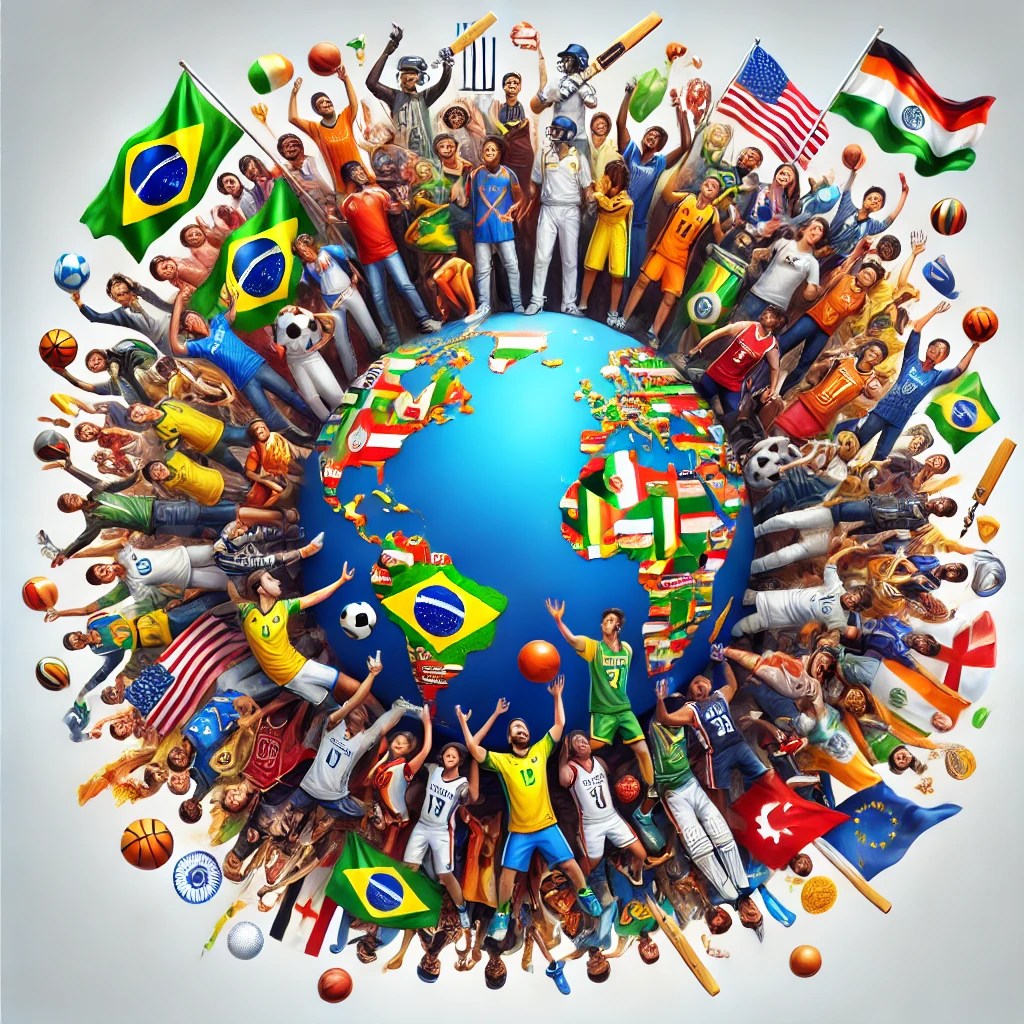
We love good stories. We love underdog stories. We love when things turn upside down. We love last minute turnarounds. We love it when a six off the last ball can win a match that was almost lost, and when that’s a final, we go bonkers. We love it when a 98th min injury time goal wins the English Premier League. We are suckers for emotional roller coasters and nothing does that better than sports. Cricket fans often hear the cliched “no one could have scripted this”, and it’s mostly deserved. We love the thrill that we feel when there are turnaround moments, even when they are not in our favour, even when we have very little knowledge of the players, or the sports; think Manu Bhaker or Neeraj Chopra at the Olympics. We just love those close-edged stuff, so much so that live sports almost always dominate movies, web series and whatnots in terms of viewership on screen and definitely off screen!
Why, O! Why! Are we so deeply connected and impacted by sports?
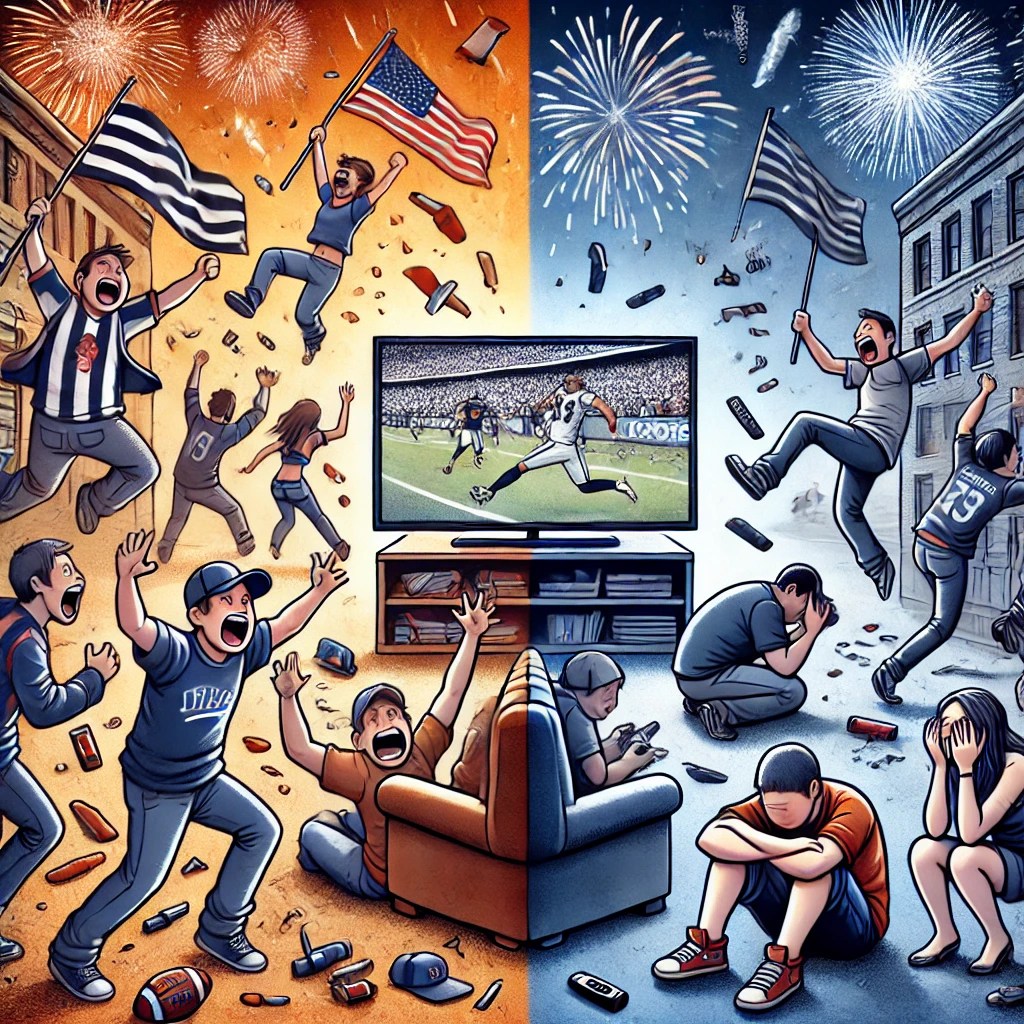
Anyone who has had more than a cursory attachment with sports, will probably be able to relate to many of the reasons given above. Of course I wouldn’t claim that these reasons or even this connection is universal. There are clearly those who don’t have the same emotional ups and downs as the typical fan does. That may be a gender thing, or it may be cultural, or it may be individual; of course “us sports fans” don’t like such people – often teasing them or downright bullying them.
In any case most of us would be able to connect with the concept of tribalism, which is evident in our everyday lives. We form groups at every opportunity – be it within residential societies, workplaces, or educational institutions. I’ve been part of numerous such tribes, each with its own identity and sense of belonging. Even at a society level when playing a “Silly Premier League” we get raucous about our silly teams playing 8-over matches where you are scoring 200 runs! Of course the sense of community may be about other events such as Navratri or Ganapati or Durga Puja celebrations. Much of that is fuelled by youngsters, as was the case for most of us growing up.
So who cares?
Well if you didn’t find the discourse interesting till now, there’s no point in you having reached this paragraph, sentence, word or letter! But now that you are here – you care about this topic, because it’s “bloody fascinating” (said in as much of a British accent as possible). Like Obelix would say “These Romans are crazy”, I would say “Us humans are crazy”. We fret and make a fuss about whether our sports team or favourite tennis player is winning or losing. And we definitely celebrate the wins, and mourn the losses. And yet we care much less about global warming, poverty and all the other ills that we face. We are willing to spend tons of money to go watch important matches (like a group of my close friends did when they spent crazy amounts of money and time to fly from Bangalore to Ahmedabad to watch the 2023 World Cup Finals) and yet we find it difficult to donate to causes that matter. And this is meant with no higher moral ground. I am very much one of those fans, maybe less subtle, and far more lazy (to make the effort to stand in long queues) but definitely emotionally invested in many many sporting events.
How can we be so emotionally connected with sports teams, which are nothing but fictional groups of strangers with whom we have pretty much nothing to do? When a group of raucous crazy humans experience their team winning, it’s the closest we get to being one with others, something we crave due to our evolutionary instincts, but modern day life doesn’t make any space for that instinct.

Why do we care so much?
Perhaps it’s because sports offer us a microcosm of life – the struggle, the triumph, the heartbreak. They reflect our innate desires for belonging, achievement, and experiencing emotions collectively. As I reminisce about the countless matches watched, the cheers shared, and the tears shed, I realise that sports, in their own unique way, enrich our lives, connecting us to something bigger than ourselves.
Our passion for sports is an intricate tapestry of emotion, psychology, and culture. It’s a world where yelling at a TV screen is normal and where matches can feel like personal battles. As we navigate our roles as fans, it’s essential to find a balance – one that allows us to enjoy the thrill of sports while ensuring it enriches rather than dominates our lives.
In an alternate universe, there’s a version of me unaffected by cricket losses and wins. Here, however, I remain an avid fan, riding the emotional rollercoaster that comes with every game, every season. It’s a fascinating, sometimes bewildering, but always a compelling journey.
So it matters that we understand this phenomenon – because in a very cliched way, this is what makes us human, for better or for worse. Now if only we could harness this fandom craziness to solve the world’s problems….
 My Weltanschauung